
Are you tired of struggling to hear your loved ones, or feeling left out in conversations? Finding the right hearing aid can be overwhelming with so many options available. The good news is that you’ve come to the right place! Our comprehensive guide will walk you through everything you need to know about choosing the best hearing aid for your needs.
We’ll start by covering the different types of hearing aids, from behind-the-ear models to completely-in-canal styles, and explain their unique features. You’ll also learn about the top brands in the industry, including their innovative technologies and benefits. Whether you’re looking for a budget-friendly option or a high-tech device with advanced features, our guide has got you covered. By the end of this article, you’ll be equipped with the knowledge to find the perfect hearing aid that suits your lifestyle and preferences.
Understanding Your Hearing Loss Needs
As you consider which hearing aid is best for you, understanding your specific needs and goals will be crucial to making an informed decision. Let’s break down what factors to focus on next.
Assessing the Type and Severity of Your Hearing Loss
Hearing loss can be categorized into different types based on its severity and location within the ear. Conductive hearing loss occurs when there’s an issue with sound conduction through the outer or middle ear, often due to a blockage like earwax buildup or perforated eardrum. Sensorineural hearing loss, on the other hand, is caused by damage to the inner ear or auditory nerve.
To determine the type and severity of your hearing loss, various tests are conducted. These include pure-tone audiometry, which measures sound sensitivity; speech audiometry, which assesses spoken language comprehension; and tympanometry, used for diagnosing middle ear problems. Your healthcare provider will interpret these results to create a personalized diagnosis.
It’s essential to note that some individuals may experience both conductive and sensorineural hearing loss simultaneously, known as mixed hearing loss. If you’re experiencing hearing difficulties, consult an audiologist or ENT specialist who can conduct the necessary tests to determine the type and severity of your condition.
Considering the Impact on Daily Life
When you’re struggling with hearing loss, it can have a profound impact on your daily life. Communication challenges are one of the most significant difficulties people face. Imagine trying to carry on a conversation at a restaurant or with friends and family, only to find yourself constantly asking for repetition or feeling frustrated when you don’t understand what’s being said. This can lead to feelings of embarrassment, anxiety, and isolation.
Social interactions become increasingly difficult, causing many individuals to withdraw from social situations altogether. Even simple tasks like ordering food at a drive-thru or having a phone conversation with a bank representative become monumental hurdles. The emotional strain of hearing loss should not be underestimated – it’s common for people to feel sad, angry, or even depressed due to the constant frustration and isolation.
To make the most of your hearing aid, consider how you can adapt your daily life to work around its limitations. For instance, use visual aids like lip-reading or written communication when possible. This can help reduce feelings of anxiety and isolation. By acknowledging the impact of hearing loss on your daily life and making these small adjustments, you’ll be better equipped to navigate the world with confidence and independence.
Exploring Treatment Options Beyond Hearing Aids
While hearing aids are often the first line of treatment for hearing loss, they may not be the only solution. In fact, some individuals may find that other options better suit their specific needs. For instance, cochlear implants can be an effective choice for those with severe to profound sensorineural hearing loss. These implantable devices bypass damaged hair cells in the inner ear and directly stimulate the auditory nerve.
Another option is bone-anchored hearing aids (BAHAs), which use a surgically implanted device to transfer sound through the skull to the inner ear. BAHAs are often recommended for individuals with conductive or mixed hearing loss, particularly those who have difficulty with conventional hearing aids. Assistive listening devices, such as personal amplifiers and loop systems, can also be beneficial in specific situations, like watching TV or attending concerts. These devices work by improving sound quality and reducing background noise. If you’re considering these alternatives, consult an audiologist to determine the best course of treatment for your unique hearing needs.
Types of Hearing Aids: Which One is Right for You?
With so many types of hearing aids available, it’s essential to understand your options and choose the one that best fits your lifestyle and needs. Let’s dive into the different types of hearing aids that can help you hear better today.
Behind-the-Ear (BTE) Hearing Aids
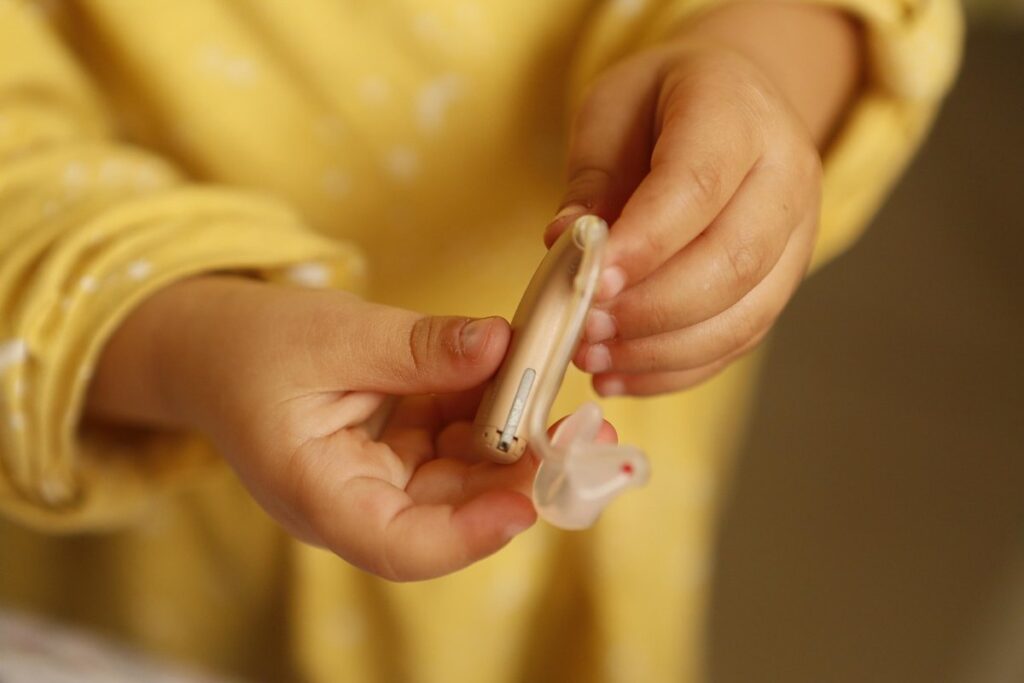
Behind-the-Ear (BTE) hearing aids are one of the most common types of hearing aids on the market. They consist of a body that rests behind the ear and is connected to an earmold by a tube, which transmits sound vibrations into the ear canal.
One of the primary benefits of BTE hearing aids is their ability to amplify sound effectively, especially in noisy environments. This design also allows for larger batteries, making them more durable and long-lasting. Additionally, many BTE models come equipped with advanced features such as directional microphones, which can help users better distinguish between background noise and important speech sounds.
However, one potential drawback of BTE hearing aids is their visible design, which may make some users self-conscious about wearing them in public. Furthermore, the tubing that connects the body to the earmold can sometimes become loose or clogged, requiring adjustments or maintenance from a hearing professional.
Despite these limitations, many audiologists recommend BTE hearing aids for their effectiveness and ease of use. If you’re considering BTE hearing aids, consult with an audiologist to determine if this design is right for your specific needs and preferences.
Receiver-in-Canal (RIC) and Completely-in-Canal (CIC) Hearing Aids
When it comes to hearing aid design, two popular options are Receiver-in-Canal (RIC) and Completely-in-Canal (CIC) models. While both styles offer discreet sound amplification, they differ significantly in terms of style, functionality, and user experience.
RIC hearing aids have a small receiver that is placed inside the ear canal, connected to an outer casing behind the ear. This design allows for easy battery replacement and greater versatility with accessories like telecoils. RIC devices are also typically more affordable than CIC models and can be easier to fit and adjust. However, some users may find the external casing bulky or obtrusive.
CIC hearing aids, on the other hand, have a completely self-contained design that sits deep within the ear canal. This style provides maximum discretion but can be more difficult to clean and maintain. CIC devices are generally better suited for individuals with mild to moderate hearing loss who require minimal amplification. Ultimately, the choice between RIC and CIC depends on individual preferences regarding style, convenience, and sound quality. It’s essential to consult an audiologist or hearing specialist to determine which design best meets your unique needs and lifestyle.
In-the-Canal (ITC) and Half Shell (HS) Hearing Aids
In-the-Canal (ITC) and Half Shell (HS) hearing aids are popular choices for individuals with mild to severe hearing loss. These devices are designed to be discreet and comfortable, making them ideal for those who want a more natural fit.
Similar to Completely-in-Canal (CIC) hearing aids, ITC models sit deep within the ear canal, while HS models extend slightly into the ear canal but not as far back. However, both ITC and HS devices are larger than CIC models and offer a more visible appearance compared to other types of hearing aids.
One key advantage of ITC and HS hearing aids is their ability to be customized to fit each individual’s ear shape. This personalized approach ensures optimal sound quality and comfort. Additionally, these devices often feature rechargeable batteries or disposable ones that provide up to several weeks of power.
When considering ITC or HS hearing aids, it’s essential to consult with a hearing specialist who can assess your specific needs and preferences. They will help determine which style best suits you based on factors such as ear size, hearing loss level, and lifestyle requirements.
Features to Consider When Choosing a Hearing Aid
When it comes to selecting the right hearing aid, there are several features you’ll want to consider, such as battery life and waterproofing options. These factors can greatly impact your overall experience.
Noise Reduction and Feedback Suppression
When choosing a hearing aid, one crucial feature to consider is noise reduction and feedback suppression. These features can significantly improve sound quality and reduce user frustration by minimizing background noise and unwanted sounds.
Noise reduction technology allows the hearing aid to distinguish between wanted and unwanted sounds, selectively amplifying speech while reducing ambient noise. This means you’ll be able to focus on conversations in noisy environments without straining your ears. For instance, imagine attending a crowded restaurant with family – a good noise-reduction feature would help you pick up what your partner is saying without having to constantly ask them to repeat themselves.
Feedback suppression, also known as “occlusion effect,” works by detecting the sound of the hearing aid itself and cancelling it out. This prevents the unpleasant whistling or screeching sounds some users may experience when wearing a hearing aid, especially in quiet environments. By reducing these unwanted sounds, you can enjoy more comfortable listening experiences with less distraction. When selecting a hearing aid, look for models that incorporate advanced noise reduction and feedback suppression algorithms to ensure optimal sound quality and user satisfaction.
Rechargeability and Battery Life
When it comes to choosing a hearing aid, one important feature to consider is rechargeability and battery life. Rechargeable hearing aids have become increasingly popular due to their convenience and cost-effectiveness.
One of the main benefits of rechargeable hearing aids is the elimination of disposable batteries. This not only saves you money in the long run but also reduces electronic waste. According to a study, the average person goes through 20-30 pairs of batteries per year, which can add up to a significant environmental impact. With rechargeable hearing aids, you can simply plug them into a charger and have them ready for use when needed.
However, it’s essential to consider the cost of replacement chargers and the initial investment in rechargeable devices. Some rechargeable hearing aids may require more frequent recharging or have limited battery life compared to disposable batteries. To make an informed decision, weigh the pros and cons carefully. If you’re looking for a hassle-free experience and want to reduce your environmental footprint, rechargeable hearing aids might be the right choice for you.
Connectivity Options: Bluetooth, Wireless, or Wired?
When choosing a hearing aid, one of the most important considerations is connectivity options. With so many devices relying on wireless connections, it’s essential to understand the pros and cons of each type: Bluetooth, wireless, or wired.
Bluetooth connectivity allows for seamless pairing with phones, TVs, and other devices, making it easy to stream audio directly into your hearing aids. This is particularly useful for phone calls, music listening, and watching TV without disturbing others. However, Bluetooth connections can be prone to interference and may not work well in areas with high levels of electromagnetic radiation.
Wireless connectivity options, such as FM systems or radio frequency (RF) signals, are often used in public spaces like theaters or churches. They transmit sound directly into the hearing aid, allowing you to hear clearly without relying on Bluetooth connections. However, these systems may require additional equipment and can be limited by range.
When choosing your hearing aid, consider your lifestyle and preferences: do you primarily use your phone for streaming audio, or are you more likely to be in public spaces that rely on FM systems?
Top Brands and Models to Consider
When it comes to selecting a hearing aid, it can be overwhelming to navigate through numerous top brands and models. Let’s take a closer look at some of the most popular options available.
High-End Brands: Phonak, Oticon, and Resound
Phonak, Oticon, and Resound are among the top high-end hearing aid brands that offer exceptional sound quality and advanced features. Phonak’s lithium-ion rechargeable batteries provide up to 24 hours of power, while their Marvel Pro technology offers industry-leading speech recognition and noise reduction capabilities.
Oticon’s Opn S platform boasts a unique “brain-inspired” approach to sound processing, allowing for more natural-sounding conversations in noisy environments. Their Xceed technology enables seamless transitions between different listening situations. Users praise Oticon for its exceptional sound quality, noting that it rivals their own hearing abilities before the need for amplification.
Resound’s Enya2 SP platform offers an innovative “Speech Enhancer” feature that automatically adjusts to different speaking styles and backgrounds. Its rechargeable batteries provide up to 30 hours of power per charge. Many users report improved speech understanding in challenging environments, such as restaurants or parties.
When considering these high-end brands, it’s essential to prioritize your specific needs and preferences. For instance, if you struggle with noise reduction, Phonak might be the best choice. If you prefer a more natural-sounding conversation, Oticon could be the way to go.
Mid-Range Brands: Widex, Signia, and Rexton
Mid-range hearing aid brands like Widex, Signia, and Rexton offer an attractive balance between price and performance. At a lower price point than premium brands, these mid-range options often come with impressive features that rival those of their more expensive counterparts.
Widex, for instance, boasts advanced sound processing capabilities that mimic the natural sounds of human speech. Their hearing aids are known for their exceptional noise reduction, which can be especially beneficial in noisy environments like restaurants or public transportation. Widex hearing aids typically range from $1,500 to $3,000 per pair.
Signia offers a wide range of mid-range options, including rechargeable and non-rechargeable models. Their hearing aids are designed with sleek designs and advanced features like artificial intelligence-powered noise reduction. Prices for Signia hearing aids fall between $1,200 and $2,800 per pair.
Rexton, on the other hand, focuses on delivering high-quality sound at an affordable price. Their mid-range options typically range from $1,000 to $2,500 per pair, making them a more budget-friendly option for those looking for reliable performance without breaking the bank.
Budget-Friendly Options from Brands like Hansaton and Unitron
When it comes to choosing a hearing aid that fits within your budget, don’t assume that you have to sacrifice quality for affordability. Emerging brands like Hansaton and Unitron are offering top-notch products at more affordable price points.
Hansaton, for example, offers the Hansa Primero 2, a rechargeable hearing aid with advanced noise reduction features and an ergonomic design for comfortable wear. With prices starting around $1,200 per unit, it’s clear that Hansaton is committed to making high-quality technology accessible to more people.
Unitron, on the other hand, has released the Stride M240, a sleek and versatile hearing aid with multiple program settings and Bluetooth connectivity. Priced at around $1,500 for a single device, Unitron’s Stride series offers an unbeatable value in terms of features and price point.
When shopping for budget-friendly hearing aids from these brands, consider the following tips: compare prices across different retailers, take advantage of sales or promotions, and prioritize your needs to ensure that you’re getting the most bang for your buck.
Tips for Fitting and Adjusting Your New Hearing Aid
Now that you’ve chosen your new hearing aid, let’s focus on getting it fitted and adjusted perfectly to suit your unique needs. This section will walk you through essential tips for a comfortable fit.
Working with an Audiologist or Hearing Specialist
When it comes to fitting and adjusting your new hearing aid, working with an audiologist or hearing specialist is crucial for optimal performance. While some hearing aids come pre-programmed, a proper fitting ensures that the device meets your unique needs and addresses specific issues such as background noise, speech clarity, and overall comfort.
It’s essential to find an audiologist who has experience working with patients with similar hearing loss profiles or conditions. During the initial consultation, expect them to conduct a thorough evaluation of your hearing, including pure-tone and speech audiometry tests. This information will help them program your hearing aid for maximum benefit.
Proper fitting and adjustment also involve teaching you how to use and care for your device effectively. Your audiologist will show you how to insert the earmold or dome, adjust volume levels, and troubleshoot common issues. Be sure to ask questions during this process to ensure you feel comfortable and confident using your new hearing aid.
Common Challenges and How to Overcome Them
Fitting and adjusting to a new hearing aid can be a challenging process, and it’s not uncommon for users to experience common issues such as feedback, distortion, or difficulty with speech recognition. Feedback is a high-pitched squealing sound that occurs when the hearing aid picks up its own sound, causing a vicious cycle of amplification. This can usually be resolved by adjusting the microphone placement, reducing the volume, or changing the program setting.
Distortion, on the other hand, can manifest as a warbling or fuzzy sound, particularly in noisy environments. To overcome this, try adjusting the compression settings or consulting with an audiologist to fine-tune your hearing aid’s settings. Speech recognition difficulties may arise due to background noise or a mismatch between the hearing aid and your individual needs. In such cases, consider investing in a hearing aid with advanced noise reduction features or taking advantage of remote programming services for more precise adjustments.
It’s also essential to work closely with your audiologist to ensure that your hearing aid is tailored to your specific requirements. By doing so, you’ll be better equipped to overcome common challenges and enjoy improved communication outcomes.
Conclusion: Finding the Best Hearing Aid for Your Needs
Now that you’ve weighed your options, it’s time to make a decision and find the perfect hearing aid that suits your unique needs and lifestyle. This final section will help guide you in making an informed choice.
Final Thoughts on Choosing the Right Hearing Aid
As you come to the end of this comprehensive guide, it’s essential to reflect on the key takeaways that will help you make an informed decision when choosing the right hearing aid. Remember, every individual has unique needs and preferences, and what works for someone else may not work for you.
Prioritizing your needs and preferences is crucial in selecting a hearing aid that meets your specific requirements. Consider your lifestyle, budget, and personal preferences when evaluating different options. Ask yourself questions like: What are my main communication challenges? Do I prefer behind-the-ear or completely-in-canal devices? How important is ease of use to me?
Don’t be afraid to ask for professional advice from an audiologist or hearing specialist. They can help you navigate the complex world of hearing aids and recommend options that cater to your specific needs.
Ultimately, choosing the right hearing aid is a personal decision that requires careful consideration. It’s not just about finding a device that alleviates your hearing difficulties but also one that fits comfortably into your lifestyle. Take your time, do your research, and trust your instincts.
To recap, here are some essential tips to keep in mind:
* Prioritize your needs and preferences when evaluating different options
* Consider your lifestyle, budget, and personal preferences
* Don’t be afraid to ask for professional advice from an audiologist or hearing specialist
* Take your time and do your research before making a decision
By following these guidelines and staying focused on your unique needs and preferences, you’ll be well-equipped to find the best hearing aid that suits your requirements. Remember, it’s not just about finding a device – it’s about regaining control over your communication and improving your overall quality of life.
Frequently Asked Questions
What if I’ve tried other hearing aids before but still struggle with finding the right fit?
If you’ve previously used a hearing aid that didn’t meet your expectations, don’t be discouraged! It’s not uncommon for people to need multiple fittings or adjustments to find the perfect device. Schedule an appointment with an audiologist or hearing specialist who can assess your unique needs and recommend tailored solutions.
How do I know if my insurance plan covers hearing aids or their maintenance?
Check your insurance policy documents or contact your provider directly to confirm coverage details. Some plans may require pre-authorization or have specific requirements for hearing aid maintenance, such as annual cleanings or battery replacements. Being informed will help you budget and make the most of your benefits.
Can I use my new hearing aid in different environments, like at home, work, or during travel?
Yes! Most modern hearing aids are designed to adapt to various settings, allowing you to switch between programs for optimal performance in different environments. Be sure to consult with an audiologist or hearing specialist to set up custom settings and ensure seamless transitions.
What’s the typical lifespan of a rechargeable hearing aid battery?
The lifespan of rechargeable hearing aid batteries varies depending on usage patterns and quality of the device. Generally, you can expect 12-24 months of reliable performance before needing replacement. Regular maintenance and proper charging habits will also contribute to extended battery life.
How often should I schedule follow-up appointments with my audiologist or hearing specialist?
It’s recommended to schedule regular check-ups (typically every 6-12 months) to ensure your hearing aid is functioning correctly, make adjustments as needed, and address any concerns or issues that arise. This proactive approach will help you maintain optimal hearing health and satisfaction with your device.