
Cataract surgery can be a daunting prospect for seniors, but with the right information, it can be a straightforward and successful procedure. As we age, the lens in our eye can become cloudy, leading to blurred vision, sensitivity to light, and even vision loss. For many elderly individuals, cataract surgery is the only option to restore clear vision and regain independence. But where do you start? This comprehensive guide is designed to walk you through every step of the cataract surgery process, from preparation and surgery to post-operative care and managing potential complications. We’ll also explore how to navigate insurance and costs, ensuring that you’re well-prepared for a successful recovery. Whether you’re considering surgery for yourself or a loved one, this article aims to provide you with the knowledge and confidence to make informed decisions.
Understanding Cataracts and Their Impact on the Elderly
Cataracts are a common issue affecting millions of elderly individuals worldwide, causing significant vision loss and impacting daily life. This section explains how cataracts develop and their impact on seniors’ quality of life.
Prevalence and Causes of Cataracts in Older Adults
Cataracts are a common age-related condition that affects millions of elderly individuals worldwide. According to the World Health Organization (WHO), cataracts are the leading cause of blindness and visual impairment among people aged 40 and above. In the United States alone, it’s estimated that more than 24 million people have cataracts, with this number projected to rise to 50 million by 2050.
There are several risk factors associated with cataract development, including age, genetics, and certain medical conditions such as diabetes and hypertension. Prolonged exposure to UV radiation from the sun, smoking, and a diet low in essential nutrients like vitamin A and C can also contribute to cataract formation. Additionally, previous eye injuries or surgeries, as well as the use of certain medications like steroids, can increase the risk of developing cataracts.
It’s essential for elderly individuals to be aware of these risk factors and take preventive measures, such as wearing sunglasses with UV protection, maintaining a balanced diet, and quitting smoking, to reduce their chances of developing cataracts. Early detection and treatment can significantly improve outcomes and prevent vision loss.
Symptoms and Diagnosis of Cataracts
If you or a loved one is experiencing vision problems, it’s essential to understand the common symptoms of cataracts. One of the earliest signs is a change in vision, such as blurry or cloudy vision, which can make everyday activities like reading or watching TV challenging. You may notice glare from lights or oncoming headlights at night, which can be particularly bothersome. Some people also experience double vision, especially in low light conditions.
To diagnose cataracts, your eye doctor will perform a comprehensive eye exam, including visual acuity tests to assess your vision. They may also use imaging studies like ultrasound or optical coherence tomography (OCT) to examine the structure of your eye and determine the extent of the cataract. During the exam, your doctor may ask you to describe your symptoms in detail and perform specific tests to assess your vision and eye movements. Early detection and diagnosis are crucial for effective treatment and preventing further vision loss. If you’re experiencing any of these symptoms, consult an eye doctor for a thorough evaluation and discussion of your options.
Preparing for Cataract Surgery
Before undergoing cataract surgery, it’s essential to understand the preparation process to ensure a smooth and successful procedure. This includes medical exams, eye tests, and lifestyle adjustments.
Choosing the Right Surgeon and Facility
When choosing a surgeon and facility for cataract surgery, it’s essential to prioritize your eye health and safety. A qualified surgeon and reputable facility can make all the difference in the success and recovery of the surgery.
To begin with, research potential surgeons and facilities in your area. Look for board-certified ophthalmologists with extensive experience in cataract surgery. Check online reviews and ratings from reputable sources such as Healthgrades or Yelp to get an idea of a surgeon’s or facility’s performance.
When selecting a surgeon, consider asking the following questions: What is your experience with cataract surgery in elderly patients? What type of cataract surgery do you recommend for me? What are the potential risks and complications of the surgery? How will you ensure my safety during and after the procedure?
In addition to the surgeon’s qualifications, also research the facility where the surgery will take place. Ensure that the facility is accredited by the Joint Commission or the American Association for Accreditation of Ambulatory Surgery Facilities (AAAASF). This indicates that the facility meets high standards for patient care and safety.
Understanding the Types of Cataract Surgery
When it comes to cataract surgery, there are several types of procedures to choose from. The two most common methods are phacoemulsification and manual small incision cataract surgery (MSICS). Understanding the differences between these procedures can help you make an informed decision about which one is best for you.
Phacoemulsification is the most widely used method of cataract surgery. This procedure uses ultrasonic waves to break up the cataractous lens, which is then suctioned out of the eye. The advantage of phacoemulsification is that it can be performed through a small incision, typically 2-3 millimeters in length. This results in minimal scarring and a faster recovery time. However, there is a higher risk of complications such as inflammation and infection.
Manual small incision cataract surgery (MSICS) is another option for cataract removal. In this procedure, the cataract is removed through a small incision, but without the use of ultrasonic waves. MSICS is often preferred for patients with complex cataracts or those who are at higher risk for complications. The advantage of MSICS is that it can be less expensive than phacoemulsification and may result in fewer complications. However, the recovery time may be longer due to the larger incision size.
Pre-Surgical Tests and Evaluations
Before undergoing cataract surgery, it’s essential to undergo various pre-surgical tests and evaluations to ensure your safety and the success of the procedure. These tests will help your eye doctor assess your overall eye health, detect any underlying conditions that may affect your surgery, and determine the best course of treatment for your specific needs.
You’ll likely start by undergoing a dilation test, where your doctor will use special drops to widen your pupils. This allows them to examine the interior of your eyes more closely, checking for any signs of cataracts, glaucoma, or other conditions. Visual field tests may also be performed to check for any blind spots or peripheral vision loss.
Additionally, your doctor may order blood work to check for any underlying health conditions that could impact your surgery or recovery. This may include tests to monitor your glucose levels, kidney function, or blood clotting abilities.
By undergoing these tests and evaluations, you’ll be able to identify any potential issues before surgery, allowing your doctor to develop a personalized treatment plan that ensures the best possible outcome.
The Cataract Surgery Procedure
Let’s walk you through the cataract surgery procedure, step by step, to help you understand what to expect on the day of your surgery. This includes the preparation, the actual surgery, and recovery time.
Anesthesia and Sedation Options
During cataract surgery, various anesthesia and sedation options are available to ensure the patient’s comfort and safety. Local anesthesia is a common choice, where numbing eye drops or injections are used to numb the eye area. This type of anesthesia allows the patient to remain awake and alert, yet pain-free, throughout the procedure.
Topical anesthesia, also known as eye drops, is another option used to numb the eye surface. This method is often used in combination with local anesthesia to provide additional comfort. Conscious sedation is also available, which involves the use of medication to relax the patient, but not to the point of unconsciousness. This option is ideal for anxious patients or those who require additional relaxation.
In most cases, elderly patients can benefit from a combination of local and topical anesthesia, providing optimal comfort and minimizing the risk of complications. It’s essential to discuss your anesthesia options with your ophthalmologist before the procedure to determine the best course of treatment for your specific needs.
The Surgery Process and Timeline
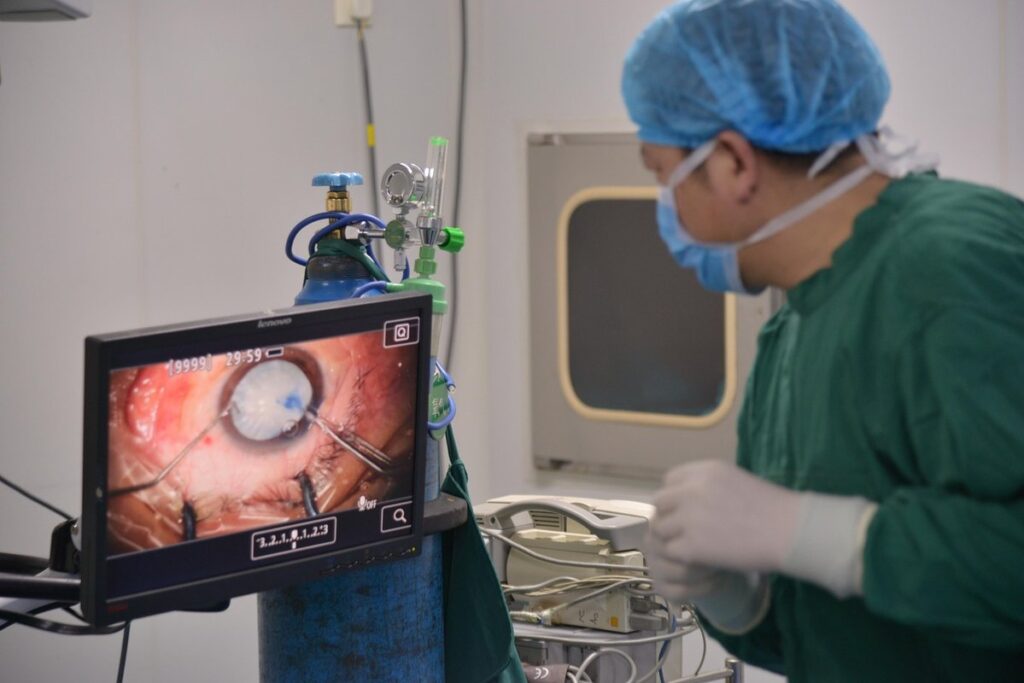
During the surgery process, the goal is to remove the cloudy lens (cataract) and replace it with an artificial intraocular lens (IOL) that allows for clear vision. The entire procedure typically takes about 30-60 minutes to complete, and you’ll be under local anesthesia to minimize discomfort.
The first step is creating an incision in the cornea, usually about 10-12 mm in length, through which the cataract surgeon will access the cataract. This incision is self-sealing, meaning it will close on its own after the surgery. The cataract is then gently broken up using ultrasonic waves and removed through the same incision.
Once the cataract is removed, the IOL is inserted through the incision and placed in the correct position. The IOL is designed to match your eye’s unique curvature, ensuring clear vision. The surgeon will then close the incision, and the eye will begin to heal naturally.
It’s essential to follow the post-operative instructions provided by your surgeon to ensure a smooth recovery. This may include resting your eyes, using eye drops, and attending follow-up appointments to monitor your progress. With proper care and attention, most patients can expect to see significant improvement in their vision within a few days to a week after surgery.
Managing Post-Surgical Pain and Recovery
Managing post-surgical pain and recovery is crucial for a smooth and successful cataract surgery experience, especially for the elderly. After the procedure, you may experience discomfort, redness, and sensitivity to light. To manage these symptoms, your surgeon will prescribe medication, which should be taken exactly as directed.
In addition to medication, eye drops are an essential part of post-operative care. Anti-inflammatory and antibiotic drops will be prescribed to reduce swelling and prevent infection. It’s essential to use these drops as directed to avoid any complications. To promote healing and reduce discomfort, get plenty of rest and avoid heavy lifting, bending, or strenuous activities.
When resting, keep your head elevated and apply a cold compress to the affected eye. These simple steps can significantly reduce discomfort and promote a speedy recovery. Always follow your surgeon’s instructions and attend follow-up appointments to ensure your eyes are healing as expected. By taking these steps, you can minimize the risk of complications and achieve a successful outcome from your cataract surgery.
Post-Surgical Care and Follow-Up
Now that your cataract surgery is complete, it’s essential to follow the post-operative care instructions carefully to ensure a smooth recovery and optimal results. We’ll walk you through the steps to follow after your surgery.
Recovery Timeline and Expectations
When you undergo cataract surgery, it’s essential to understand the typical recovery timeline to ensure a smooth and successful outcome. In the immediate post-surgery period, which is usually the first 24 to 48 hours, you can expect to experience some discomfort, sensitivity to light, and blurry vision. This is due to the eye adjusting to the new intraocular lens (IOL).
During this time, your eye doctor will instruct you to rest your eyes, avoid heavy lifting, and use eye drops as prescribed to prevent infection and promote healing. It’s also crucial to follow a strict medication regimen to prevent complications. In most cases, patients can return to their normal activities within a few days, but it’s essential to be patient and let your eye heal at its own pace.
Short-term follow-up appointments, usually scheduled for 1 to 2 weeks after surgery, are crucial to monitor the healing process and ensure the IOL is properly positioned. During these visits, your eye doctor will check for any signs of infection, inflammation, or other complications. Long-term follow-up appointments, typically scheduled for 1 to 3 months after surgery, will assess the final outcome of your surgery and make any necessary adjustments.
Managing Complications and Side Effects
As you recover from cataract surgery, it’s essential to be aware of potential complications and side effects. While rare, these issues can arise in elderly patients and require prompt attention. Infection is one possible complication, although it’s relatively uncommon with modern surgical techniques. Your surgeon will prescribe antibiotics to minimize the risk, but if you experience any signs of infection, such as redness, swelling, or discharge, contact your healthcare provider immediately.
Bleeding is another potential complication, although it’s usually minor. If you experience bleeding or vision changes, inform your surgeon right away. IOL (intraocular lens) malposition, where the lens is not properly placed, can also occur. This may cause vision problems or discomfort, and your surgeon may need to perform a secondary procedure to correct the issue.
To manage these complications, it’s crucial to follow your surgeon’s post-operative instructions carefully. Attend follow-up appointments as scheduled, and report any concerns or issues promptly. By being proactive and aware of potential complications, you can minimize risks and ensure a smooth recovery.
Follow-Up Appointments and Evaluations
Follow-up appointments and evaluations are crucial for the elderly after cataract surgery. They ensure that the healing process is progressing as expected and that any potential issues are addressed promptly. It’s essential to attend these appointments to prevent complications and achieve optimal vision outcomes.
Typically, follow-up appointments are scheduled a few days to a week after the surgery, and subsequent appointments may be scheduled at intervals of 1-2 weeks. During these visits, your surgeon will assess the healing of the incision site, check for any signs of infection, and monitor the clarity of your vision. They may also adjust your eyeglasses prescription as needed.
At the first follow-up appointment, you can expect to have a dilation test to check the health of the newly implanted lens. Your surgeon will also review the results of any post-operative tests, such as an echography, to ensure that the lens is in place correctly.
Managing Costs and Insurance for Cataract Surgery
Understanding the financial aspects of cataract surgery is crucial for elderly patients, so let’s break down the costs and insurance options to help you prepare.
Insurance Coverage and Out-of-Pocket Costs
Insurance coverage for cataract surgery varies depending on your type of insurance and age. If you’re 65 or older, you’re likely covered under Medicare. Medicare Part B typically covers 80% of the cost of cataract surgery, while you’ll be responsible for the remaining 20%. However, you may need to pay a deductible of around $198 in 2023.
Private insurance plans also cover cataract surgery, but the extent of coverage can vary greatly. Some plans may require you to pay a copayment or coinsurance, while others may not cover the surgery at all. It’s essential to review your policy documents carefully to understand what’s covered and what’s not.
Out-of-pocket costs can add up quickly, especially if you need to pay for any additional services or equipment. To minimize your expenses, be sure to ask about any discounts or financial assistance programs available at your surgical facility. Some facilities may offer sliding scale fees or packages that include comprehensive care. By doing your research and understanding your insurance coverage, you can make informed decisions about your cataract surgery and budget accordingly.
Financial Planning and Preparation
Estimating cataract surgery costs can be overwhelming, but understanding your financial obligations beforehand can help you prepare for this significant expense. Start by researching the average cost of cataract surgery in your area, which can range from $2,000 to $5,000 per eye, depending on the location, surgeon’s fees, and technology used. Additionally, factor in costs associated with preoperative and postoperative care, such as follow-up appointments, medication, and potential complications.
It’s essential to save for these expenses by setting aside a specific amount each month or considering a dedicated savings plan. Some patients opt to use their health insurance coverage, but out-of-pocket costs may still apply. Others choose to finance their surgery through medical credit cards or payment plans offered by the surgeon or hospital.
Before making a decision, carefully review your insurance coverage, including any deductibles, co-payments, or co-insurance, to determine your financial responsibilities. Research financing options and discuss them with your surgeon or financial advisor to ensure you’re making the most cost-effective choice for your situation. By understanding your financial obligations, you can plan ahead and make informed decisions about your cataract surgery.
Conclusion and Final Thoughts
As we come to the end of this comprehensive guide, let’s summarize the key takeaways and reflect on what you can expect from cataract surgery as an elderly individual.
Recap of Key Points
As we conclude our comprehensive guide to cataract surgery for the elderly, let’s recap the key points to ensure you’re well-prepared for this important procedure. Choosing the right surgeon is crucial – look for one with extensive experience in cataract surgery, and don’t hesitate to ask about their success rates and patient testimonials. Understanding the surgery process is also vital – it typically involves a 30-minute procedure where the surgeon removes the cloudy lens and replaces it with an artificial one. Proper anesthesia is essential to minimize discomfort, and most patients are able to see improvements in vision immediately after surgery.
In addition to selecting a qualified surgeon and understanding the surgery process, managing post-surgical care is also critical. This includes attending follow-up appointments to ensure proper healing, administering medications as prescribed, and avoiding heavy lifting or bending. By prioritizing these key factors, you can minimize complications and optimize the success of your cataract surgery.
Encouragement and Support for Elderly Patients
As you prepare for cataract surgery, it’s essential to know that you’re not alone in this journey. Many elderly patients have undergone successful procedures and regained their independence and mobility. The benefits of cataract surgery extend far beyond improved vision – it can also enhance your overall quality of life.
Imagine being able to see your loved ones’ smiling faces without squinting or struggling to read the newspaper. Envision being able to walk without worrying about tripping over obstacles or losing your balance. These improvements in vision can have a profound impact on your mental and physical well-being. According to a study published in the Journal of Cataract & Refractive Surgery, 95% of patients reported improved visual acuity and 90% reported improved quality of life after cataract surgery.
To get the most out of your surgery, be sure to follow your surgeon’s instructions and attend post-operative appointments. Don’t hesitate to reach out to your healthcare team if you have questions or concerns. With the right support and care, you can look forward to a brighter, more independent future.
Frequently Asked Questions
Can I drive myself to and from cataract surgery?
Yes, most elderly individuals can drive themselves to and from the surgery center, but it’s essential to follow the surgeon’s instructions regarding medication and potential drowsiness. However, it’s recommended to have a friend or family member accompany you for support and to ensure a safe ride home.
What if I have other medical conditions or take medications that may interact with anesthesia?
Inform your surgeon about any pre-existing conditions or medications you’re taking, as this will help them choose the best anesthesia options for you. In some cases, additional tests or evaluations may be required to ensure your safety during surgery.
How long will I need to rest and recover after cataract surgery?
The recovery time varies for each individual, but most people can return to their normal activities within a few days to a week. Your surgeon will provide personalized instructions on post-operative care, including eye drops, medication, and exercise recommendations to promote a smooth recovery.
Are there any ways to reduce or manage the costs associated with cataract surgery?
Yes, many insurance plans cover a significant portion of cataract surgery costs. You may also be eligible for government programs or discounts offered by the surgery center. It’s crucial to discuss your insurance coverage and financial options with your surgeon or facility administrator to determine the best course of action.
What if I experience complications or side effects after cataract surgery?
While rare, complications can occur after cataract surgery. If you experience any unusual symptoms, such as severe pain, vision loss, or double vision, contact your surgeon immediately. They will provide guidance on managing any issues and schedule follow-up appointments as needed to ensure your continued recovery and vision health.