
As we age, our minds can become increasingly vulnerable to cognitive decline, stress, and anxiety. But there is good news: engaging in activities that challenge our brains can have a profound impact on our mental well-being. Free puzzles for seniors are an excellent way to stimulate the mind and keep it sharp, all without breaking the bank or requiring any specialized equipment. From online resources to mobile apps and printable puzzle books, there’s a wealth of free options available to help seniors stay engaged and focused. In this article, we’ll explore some of these online resources and provide you with access to a variety of free puzzles that can be used to reduce cognitive decline, stress, and anxiety in seniors. By the end of this article, you’ll know where to find hundreds of free puzzles that can help keep your mind sharp and engaged.
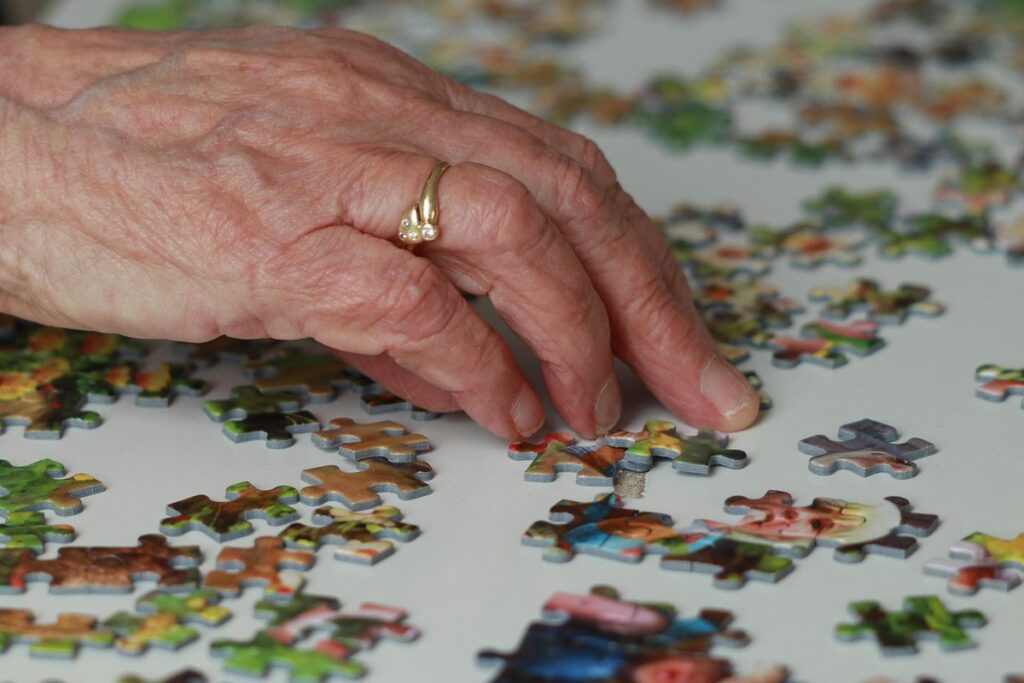
The Importance of Cognitive Stimulation
Cognitive stimulation is essential for seniors, as it can help slow cognitive decline and even improve memory and concentration. Let’s examine the critical role that mental exercises play in supporting overall health.
Reducing Cognitive Decline in Seniors
Research has shown that cognitive stimulation can significantly reduce the risk of dementia and cognitive decline in seniors. Studies have identified puzzle-based activities as a key component of effective cognitive stimulation. The most well-known example is the “Cognitive Stimulation Therapy” (CST) program, which involves engaging seniors in mentally stimulating activities for 6-12 months. Participants in CST programs that included puzzles and games showed significant improvements in cognitive function compared to those who received standard care.
Puzzle-based activities like crosswords, Sudoku, and word searches have been shown to build cognitive reserve, a concept that refers to the brain’s ability to adapt and compensate for age-related changes. By challenging the brain with increasingly complex puzzles, seniors can build this reserve and reduce their risk of dementia. Importantly, these benefits are not limited to seniors already showing signs of cognitive decline; puzzle-based activities can also be beneficial for healthy older adults looking to maintain their mental acuity.
A daily 30-minute session of puzzle-solving is a simple yet effective way for seniors to incorporate cognitive stimulation into their routine.
Types of Puzzles Suitable for Seniors
Word searches, crosswords, and Sudoku are popular puzzle types suitable for seniors. These puzzles offer a gentle challenge and can be adapted to various difficulty levels. Word searches, in particular, cater to those with cognitive decline by allowing them to focus on one word at a time.
Other engaging options include logic grids, number sequences, and picture puzzles. Logic grids require the use of reasoning and deduction to fill in missing numbers or words. Number sequences involve identifying patterns within a series of numbers. Picture puzzles, such as jigsaw puzzles, promote spatial awareness and attention to detail.
The National Institute on Aging recommends puzzles that stimulate cognitive skills like memory, attention, and processing speed. These include word games, such as Boggle and Scrabble, which can be adapted for seniors with visual impairments. When selecting a puzzle, consider the individual’s interests and abilities. For example, someone who enjoys gardening might appreciate a puzzle featuring botanical themes.
For maximum engagement, choose puzzles that incorporate familiar themes or images, making it easier to build connections between pieces of information.
Benefits of Free Puzzles for Seniors
Free puzzles can bring numerous benefits to seniors, including improved cognitive function and reduced stress levels. Let’s take a closer look at how these activities can positively impact senior mental health.
Reduced Stress and Anxiety
Engaging with free puzzles can be a calming activity for seniors, allowing them to focus on a task without feeling overwhelmed. A puzzle provides a clear goal and a sense of accomplishment when completed, which can boost self-esteem and confidence. Many seniors find that working on a puzzle helps distract from worries about the future or past, providing a mental break.
Puzzles also offer an opportunity for seniors to relax and unwind in a low-key environment. Unlike more stimulating activities like exercise or socializing, puzzles are typically done solo, allowing individuals to work at their own pace without feeling rushed or pressured by others. This can be particularly beneficial for seniors who may feel anxious or self-conscious about participating in group activities.
To incorporate free puzzle-solving into your stress-reducing routine, consider starting with shorter, simpler puzzles and gradually increasing the difficulty level as you become more comfortable. You might also experiment with different types of puzzles, such as word searches or crosswords, to find what suits your interests and skill level best.
Improved Mental Flexibility
Puzzle-solving exercises the brain’s ability to adapt and adjust to new situations, a key aspect of mental flexibility. This cognitive benefit is especially relevant for seniors, as it can help counteract age-related declines in cognitive function. Improved mental flexibility enables individuals to switch between tasks more efficiently, think on their feet, and respond to unexpected challenges.
Research has shown that engaging in mentally stimulating activities, such as puzzle-solving, can build cognitive reserve – a protective factor against age-related cognitive decline. By regularly challenging themselves with new puzzles, seniors can strengthen their brain’s ability to reorganize and adapt, much like the process of forming new neural connections. This flexibility also enhances problem-solving skills, allowing individuals to approach complex problems from multiple angles.
To experience improved mental flexibility through puzzle-solving, aim to try a variety of puzzle types, such as logic puzzles, word searches, or spatial reasoning exercises. Start with easier puzzles and gradually increase difficulty levels to continue challenging your brain. As you progress, pay attention to how your thinking and problem-solving abilities evolve – you may find yourself approaching problems more creatively and efficiently.
Resources for Free Puzzles Online
If you’re looking for ways to keep your mind engaged and challenged without breaking the bank, we’ve got you covered. Here are some top resources for free puzzles online that are perfect for seniors.
Websites Offering Free Puzzles
Websites like Puzzle Society, Jigsaw Planet, and Armored Penguin offer a vast collection of free puzzles for seniors. These websites provide a variety of puzzle types, including word searches, crosswords, Sudoku, and more. You can find puzzles with different levels of difficulty to suit your needs. For example, Puzzle Society offers a “seniors’ section” with puzzles designed specifically for older adults.
Another website, Conceptis Puzzles, provides a wide range of logic-based puzzles, including brain teasers, sliding puzzles, and other challenging games. These websites are great resources for seniors looking to engage their minds and stay mentally active. It’s essential to explore these websites regularly to discover new puzzle types and difficulties.
When choosing a website, consider the following factors:
• Puzzle variety: Look for websites that offer a wide range of puzzle types to keep your mind engaged.
• Difficulty levels: Choose puzzles with varying difficulty levels to suit your skills and interests.
• User interface: Opt for websites with user-friendly interfaces that make it easy to navigate and solve puzzles.
Regularly visiting these websites can help you stay mentally active, reduce stress, and improve cognitive flexibility.
Mobile Apps for Puzzle-Solving
Many mobile apps offer free puzzles and games suitable for seniors, often with user-friendly interfaces and accessibility features. Luminosity is one such app that provides a range of puzzle types, including crosswords, Sudoku, and word searches. Its interface is easy to navigate, and users can adjust the font size and color scheme to suit their needs.
Another popular option is Peak, which offers a variety of puzzles and games, including logic-based challenges and memory games. The app’s accessibility features include text-to-speech functionality and adjustable difficulty levels. AARP’s BrainHQ app also provides cognitive training exercises, including puzzles and brain teasers, with an emphasis on user-friendly design.
When choosing a mobile app for puzzle-solving, consider the following factors: (1) interface simplicity; (2) ability to adjust font size and color scheme; (3) availability of puzzle types that interest you; and (4) accessibility features such as text-to-speech functionality. By considering these factors, seniors can find an app that meets their needs and provides enjoyable puzzle-solving experiences.
Creating Your Own Free Puzzles
Now that you’ve seen some of the amazing free puzzle resources available, let’s explore how to create your own puzzles at home. You’ll be amazed at how simple it is!
Designing Puzzles for Seniors
When designing puzzles for seniors, it’s essential to consider their visual impairments and cognitive limitations. For visually impaired individuals, use high-contrast colors and large font sizes to make the puzzle more readable. Avoid using images or graphics that may be difficult to distinguish from the background.
For cognitively impaired individuals, simplify the puzzle design by reducing the number of pieces or using larger, easier-to-handle shapes. Consider creating puzzles with a clear narrative or theme to help seniors stay engaged and motivated.
To accommodate visual impairments, you can also use sound-based puzzles that utilize audio cues to guide the solving process. For example, a “find the object” puzzle could use distinct sounds for each object on the list.
When designing puzzles for seniors with cognitive limitations, consider using assistive technology such as screen readers or text-to-speech software to help them navigate and solve the puzzle.
Using Existing Resources to Create Custom Puzzles
When adapting existing resources into customized puzzle activities for seniors, consider repurposing books, articles, or online content. For instance, you can use a short story or article and create a word search or crossword puzzle based on the text. This approach not only saves time but also ensures relevance to the senior’s interests.
To get started, select a resource that aligns with your audience’s preferences. Break down the content into smaller chunks, focusing on specific themes or keywords. Then, design puzzles that cater to different skill levels and cognitive abilities. For example, you can create a simple word search for beginners or a more complex anagram puzzle for advanced solvers.
Some popular resources to consider include:
• Classic literature with a strong narrative thread
• News articles from reputable sources
• Educational content on history, science, or culture
When adapting these resources, keep in mind the senior’s cognitive strengths and challenges. Use clear and concise language, and avoid complex vocabulary or abstract concepts. By repurposing existing resources, you can create engaging and customized puzzle activities that cater to seniors’ unique needs and interests.
Free Puzzle Books and Printables
If you’re looking for a fun and engaging way to challenge your mind, we’ve got you covered with our curated selection of free puzzle books and printables.
We’ll share some amazing resources where you can download and enjoy puzzles tailored specifically for seniors.
Websites Offering Free Printable Puzzles
For seniors who enjoy working on puzzles with others, websites offering free printable puzzles are a valuable resource. These puzzles can be easily printed at home and used in group settings, such as senior centers or community organizations.
Some popular websites that offer free printable puzzles for seniors include PuzzleMaker, Armored Penguin, and Jigsaw Planet. On these sites, you’ll find a variety of puzzle types, including word searches, crosswords, Sudoku, and more. These puzzles can be customized to suit different skill levels and interests.
When selecting a website, consider the following criteria:
- Variety of puzzle types
- Ease of printing and customization
- Quality of puzzles (clarity, difficulty level)
- Availability of puzzles with large print options
To get started, visit websites like PuzzleMaker or Armored Penguin, which offer a range of free printable puzzles. You can browse through their collections, select the puzzles you’d like to use, and print them out at home. Be sure to review the printing instructions for each puzzle to ensure it prints correctly.
By using these websites, seniors and caregivers can provide enjoyable and engaging activities for group settings or individual use.
Local Libraries and Community Resources
Local libraries and community resources are often overlooked as a source of free puzzle books and printables for seniors. Many library branches receive regular shipments of puzzles from organizations such as American Mensa, Inc., which offers free puzzle books to local libraries. These materials can be found on the shelf or in designated puzzle sections.
To access these resources, visit your local library’s website or contact them directly to inquire about their puzzle collection. Some libraries also offer interlibrary loan services, allowing you to request puzzles from other branches if they’re not available at your own.
Additionally, community centers and senior organizations may also have puzzle materials available for free or low-cost. These resources are often targeted towards older adults and may include large-print puzzles, brain teasers, and games specifically designed for seniors with cognitive impairments. When visiting a library or community center, ask staff about their puzzle offerings and if they know of any local events or workshops that focus on puzzle-solving and mental stimulation. By taking advantage of these resources, seniors can enjoy free puzzles while also benefiting from the social interaction and community engagement often associated with these facilities.
Frequently Asked Questions
What if I’m unable to access the internet? Are there any offline puzzle resources available?
Yes, many libraries and community centers offer free puzzle books and printables that can be accessed without an internet connection. You can also consider purchasing puzzle books or creating your own custom puzzles using existing resources.
Can I use free puzzles as a substitute for medical treatment or therapy for cognitive decline?
No, while free puzzles can provide cognitive stimulation and relaxation, they should not be used as a replacement for medical treatment or therapy. Consult with a healthcare professional to determine the best course of action for addressing cognitive decline or other health concerns.
How do I know which type of puzzle is most suitable for my senior loved one’s skill level?
Consider their past interests, reading level, and cognitive abilities when choosing puzzles. Start with simpler types like word searches or crosswords, and gradually increase difficulty as they become more confident.
Can free puzzles be adapted to accommodate visual impairments or other physical limitations?
Yes, many websites and mobile apps offer accessibility features such as text-to-speech functionality, high contrast mode, or adjustable font sizes. You can also explore tactile puzzle options or work with a professional to create customized puzzles that meet the individual’s specific needs.
What if I’m concerned about my senior loved one becoming too competitive or frustrated while solving puzzles?
Encourage them to focus on the process, not just the outcome. Set achievable goals and celebrate their progress along the way. You can also try working together on puzzles as a fun bonding experience.