
If you’re like many people, you may be aware of the growing concern about dementia and its impact on families worldwide. What you might not know is that there’s a strong link between hearing loss and cognitive decline. Recent studies suggest that individuals with untreated hearing loss are more likely to develop dementia than those who don’t have this condition. But here’s the good news: research also shows that using hearing aids can significantly reduce this risk. In this article, we’ll delve into the connection between hearing loss and dementia, explore how advanced technology is being designed to aid in dementia care, and discuss the benefits of using hearing aids as a preventative measure against cognitive decline. By the end of this article, you’ll have a better understanding of how hearing aids can play a crucial role in supporting individuals with dementia.
Understanding the Connection Between Hearing Loss and Dementia
As we explore the connection between hearing loss and dementia, it’s essential to understand how untreated hearing issues can contribute to cognitive decline. This relationship is complex and worth examining more closely.
The Prevalence of Hearing Loss in Older Adults
As we explore the connection between hearing loss and dementia, it’s essential to understand the prevalence of age-related hearing loss issues among older adults. According to the National Institute on Deafness and Other Communication Disorders (NIDCD), nearly 50% of people aged 65-74 experience some degree of hearing loss, while about 80% of those over 75 suffer from significant hearing impairment.
This staggering statistic highlights the impact of age-related hearing loss on daily life. Everyday conversations become a struggle, family gatherings turn into stressful events, and even simple tasks like cooking or watching TV can be frustrating experiences. The emotional toll of feeling disconnected from loved ones cannot be overstated. Moreover, research suggests that untreated hearing loss is linked to cognitive decline, accelerated dementia progression, and increased risk of falls.
If you’re an older adult struggling with hearing loss, it’s crucial to prioritize your auditory health. Consult with a healthcare professional for a comprehensive hearing assessment. Don’t be afraid to explore treatment options, including hearing aids or cochlear implants. Your well-being, relationships, and quality of life depend on it.
The Relationship Between Hearing Loss and Cognitive Decline
Research has consistently shown that there is a significant relationship between hearing loss and cognitive decline. In fact, studies have found that individuals with untreated hearing loss are more likely to experience cognitive impairment and dementia than those without hearing problems. This is because the brain relies heavily on auditory input to process information, and when this input is compromised, it can lead to a range of negative consequences.
One way in which hearing loss contributes to cognitive decline is through increased stress and mental fatigue. When individuals struggle to hear what others are saying, they must work harder to follow conversations, leading to feelings of frustration and anxiety. This constant effort can take a toll on the brain, making it more difficult for individuals to focus, remember things, and perform daily tasks.
Additionally, hearing loss has been linked to an increased risk of dementia, with some studies suggesting that even mild hearing loss may double the risk of developing dementia. By addressing hearing loss through the use of hearing aids, we may be able to reduce this risk and improve overall cognitive health.
How Hearing Aids Can Help Mitigate Dementia Risks
Let’s explore how hearing aids can be a valuable tool in reducing dementia risks, and learn more about their potential benefits in prevention and care.
Benefits of Early Intervention with Hearing Aids
Using hearing aids early on can have a significant impact on preventing or slowing down dementia-related symptoms. When you intervene early, you allow individuals to adjust to their environment more easily and maintain their independence for a longer period. This is particularly important for older adults who are more susceptible to cognitive decline.
Research has shown that untreated hearing loss can increase the risk of developing dementia by up to 50%. By addressing this issue with hearing aids, we can potentially reduce this risk. For instance, a study on auditory therapy found that individuals with mild hearing loss who used hearing aids showed significant improvement in verbal memory and attention span compared to those without intervention.
In practical terms, using hearing aids early on allows individuals to participate more fully in social interactions, maintain better mental health, and engage in stimulating activities. This not only improves their quality of life but also helps delay the onset of dementia-related symptoms. By taking proactive steps towards addressing hearing loss, we can potentially mitigate some of the risks associated with dementia and support a healthier aging process for individuals.
The Role of Audiologists in Dementia Prevention and Management
Audiologists play a pivotal role in preventing and managing dementia through their work with older adults who experience hearing loss. By assessing and treating hearing issues, audiologists can significantly impact the progression of cognitive decline associated with age-related hearing impairment.
When evaluating patients for potential dementia risk, audiologists consider not only their auditory health but also other factors such as medical history, lifestyle choices, and mental status. This comprehensive approach enables them to identify early warning signs of cognitive decline and develop targeted interventions.
Audiologists use various assessment tools, including behavioral observations and audiometric tests, to diagnose hearing loss and its impact on patients’ lives. They then create personalized treatment plans that may include hearing aid prescriptions, counseling, or other forms of support.
In many cases, simply addressing hearing loss through amplification can have a profound effect on an individual’s mental health and quality of life. By taking proactive steps to address age-related hearing decline, audiologists contribute significantly to dementia prevention and management efforts.
Types of Hearing Aids for Dementia Care
There are various types of hearing aids that can be tailored to meet the unique needs of individuals living with dementia, each offering distinct benefits and features. Understanding these options is crucial for optimal care.
Behind-the-Ear (BTE) Hearing Aids for Dementia Patients
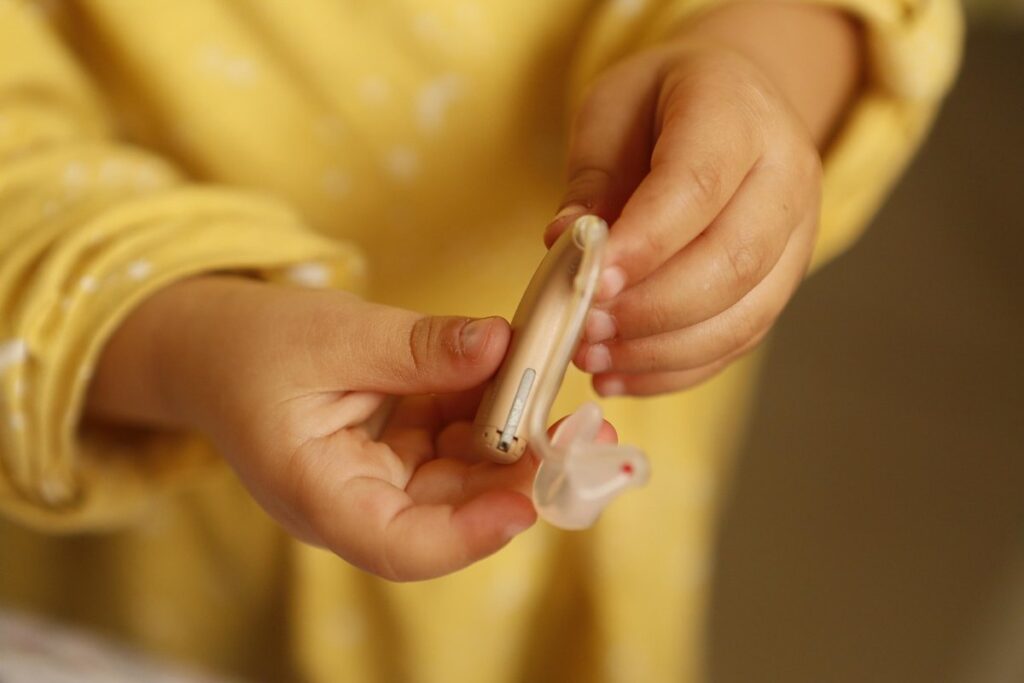
Behind-the-Ear (BTE) hearing aids are a popular choice for individuals with significant hearing losses, including those living with dementia. These devices consist of a compact amplifier and receiver connected to a thin tube that rests behind the ear, sending sound directly into the ear canal.
The benefits of BTE hearing aids in dementia care are numerous. For one, they can correct even the most severe hearing losses, making them an ideal choice for individuals who have suffered significant damage or trauma to their ears. Additionally, BTE hearing aids are often less noticeable than other types of devices, which is a consideration when caring for someone with dementia – visual cues and reminders can be overwhelming. Many models also offer advanced features like automatic noise reduction and feedback suppression, making them easier to use in distracting environments.
One of the most significant advantages of BTE hearing aids for dementia patients is their ability to improve communication and reduce feelings of isolation. By amplifying sound more effectively than other types of devices, BTE hearing aids can help individuals with dementia stay connected with loved ones and engage more fully in daily activities.
Completely-in-Canal (CIC) Hearing Aids for Discreet Use
Completely-in-Canal (CIC) hearing aids are an excellent option for older adults with dementia who require discreet correction for mild to severe hearing loss. These tiny devices fit directly into the ear canal, making them almost invisible to others. This design is particularly beneficial for individuals with dementia who may feel self-conscious about wearing more noticeable hearing aids.
CIC hearing aids are custom-made to match the unique shape of each individual’s ear, providing a secure and comfortable fit. They work by amplifying sound waves directly into the ear canal, improving speech recognition and overall communication skills. This can be especially helpful for older adults with dementia who may experience difficulty understanding conversations due to their condition.
One significant advantage of CIC hearing aids is that they are very easy to use. With a simple on/off switch, users can quickly activate or deactivate the device as needed. This can help alleviate frustration and anxiety caused by hearing difficulties. For caregivers, CIC hearing aids also offer a convenient solution for managing daily care tasks, such as monitoring medication schedules and maintaining social connections with loved ones.
Addressing Dementia-Specific Challenges with Advanced Technology
Advanced technology offers innovative solutions to manage dementia-specific challenges, from fall detection systems to virtual reality therapy programs that stimulate memory and cognitive function. These cutting-edge tools hold great promise for improving dementia care.
Using Artificial Intelligence (AI) and Machine Learning (ML) in Hearing Aids
Artificial intelligence (AI) and machine learning (ML) are transforming the hearing aid industry in ways that can significantly benefit individuals with dementia. AI-powered hearing aids can help mitigate common dementia-related challenges such as communication difficulties by automatically adjusting sound levels, noise reduction, and speech enhancement.
One of the key features of these advanced hearing aids is their ability to recognize and adapt to various environments and conversation scenarios. For instance, during a conversation in a noisy restaurant or living room, AI-powered hearing aids can pick up on the speaker’s voice while minimizing background noise. This technology can also learn an individual’s communication preferences over time, allowing for more personalized sound settings.
By utilizing AI-driven algorithms, these advanced hearing aids can improve speech clarity and reduce cognitive fatigue associated with straining to hear conversations. This can lead to increased confidence in social interactions, reduced frustration levels, and a better overall quality of life for individuals living with dementia.
Features of Modern Hearing Aids Designed for Cognitive Health
Modern hearing aids are being designed with cognitive health in mind, and their features can significantly benefit individuals with dementia. One key feature is noise reduction technology, which helps to minimize background distractions and focus attention on specific sounds. This is particularly important for people with dementia, who may have difficulty filtering out unwanted noises.
Another critical feature is feedback cancellation, which prevents the high-pitched squealing sound that often accompanies hearing aid use. This can be especially distressing for individuals with dementia, who may become anxious or disoriented by the noise. Sound amplification technology also enables hearing aids to emphasize specific frequencies, making it easier for users to distinguish between different sounds.
In addition to these features, some modern hearing aids incorporate advanced sound processing algorithms that prioritize speech recognition and clarity. For instance, some devices use artificial intelligence (AI) to detect and adapt to the user’s listening environment, automatically adjusting settings to optimize sound quality. This not only improves communication but also helps reduce cognitive strain associated with auditory challenges. By leveraging these innovative features, hearing aids can play a vital role in supporting individuals with dementia and enhancing their overall well-being.
The Importance of Family Support in Dementia Care
Family support is a crucial factor in providing effective care for loved ones with dementia, and it’s essential to understand how family involvement can impact their quality of life. We’ll explore this aspect further below.
Encouraging Open Communication about Hearing Loss
When caring for a loved one with dementia, it’s essential to recognize that hearing loss is not only a common issue but also a critical aspect of their daily life. Encouraging open communication about hearing loss can significantly impact the effectiveness of care and overall well-being.
You might be surprised by how often hearing difficulties lead to frustration, isolation, and even behavioral issues in people with dementia. This is because they struggle to understand conversations, instructions, or even familiar sounds, leading to feelings of anxiety and disorientation. In fact, research suggests that up to 80% of individuals with dementia experience some level of hearing loss.
To create a supportive environment, start by having open discussions about hearing loss within the family. Encourage each member to share their observations and concerns about your loved one’s ability to hear. Then, work together to identify strategies for improving communication, such as using visual aids, lip-reading techniques, or even just speaking more clearly.
This approach not only helps alleviate the emotional burden of living with hearing loss but also ensures that care is tailored to meet their specific needs. By acknowledging and addressing this issue, you can significantly enhance your loved one’s quality of life and create a more compassionate care experience.
Educating Loved Ones on How to Assist with Hearing Aids
When educating loved ones on how to assist with hearing aids, it’s essential to start by understanding that dementia patients often require more time and patience when handling their devices. This may involve setting aside dedicated time each day for assistance, such as during the morning routine or before mealtimes.
To make the process smoother, caregivers can label and organize hearing aids and accessories, making them easily accessible in a designated area. They should also consider using visual reminders, like charts or pictures, to help patients remember how to properly insert, remove, and clean their devices.
When assisting with hearing aid maintenance, it’s crucial to follow a consistent routine, such as cleaning the device daily and replacing batteries regularly. Caregivers can also schedule regular professional check-ups for the patient’s hearing aids to ensure they’re functioning correctly.
By following these practical tips, caregivers can significantly reduce the stress associated with assisting dementia patients with their hearing aids, allowing them to focus on providing emotional support and nurturing relationships.
Potential Barriers to Accessing Proper Dementia Care
While seeking proper dementia care is crucial, several challenges can hinder access to quality treatment. We’ll explore some of these potential barriers that may impact patients and their families.
Financial Challenges in Acquiring Advanced Hearing Technology
For many older adults, accessing advanced hearing technology is often hindered by financial constraints. The cost of high-end hearing aids can be prohibitively expensive, with prices ranging from $1,000 to over $6,000 per ear. This can be a significant barrier for individuals living on fixed incomes or those who have limited healthcare coverage.
Moreover, the out-of-pocket costs associated with hearing aid maintenance and upgrades can also be substantial. Replacing batteries, cleaning, and repairing hearing aids can cost anywhere from $50 to $200 per year. These expenses may seem minor, but they can add up over time and make it difficult for individuals to afford the latest technology.
To alleviate some of these financial burdens, consider exploring options such as Medicare Advantage plans or Medicaid coverage, which often include benefits for hearing aid maintenance and replacement. Additionally, non-profit organizations and community resources may offer financial assistance programs for low-income seniors.
Overcoming Social Stigma Surrounding Hearing Loss and Dementia
Addressing the social stigma surrounding hearing loss and dementia is crucial to promoting awareness about their interconnectedness. Many people with hearing loss feel embarrassed or ashamed, which can lead to delayed treatment and exacerbate symptoms of dementia.
By educating ourselves and others about the importance of addressing hearing loss in individuals at risk of or living with dementia, we can break down these barriers. For instance, studies have shown that even mild hearing impairment can increase the risk of cognitive decline by up to 5 times. Early intervention through hearing aids and cochlear implants has been shown to slow down this progression.
To overcome social stigma, it’s essential to create a supportive environment where individuals feel comfortable discussing their hearing loss without fear of judgment. Healthcare providers should be trained to address these concerns sensitively and offer evidence-based solutions. Individuals can also take the initiative by advocating for themselves or loved ones who may be struggling with hearing loss. By doing so, we can collectively work towards reducing the social stigma surrounding hearing loss and dementia, ultimately promoting better access to care and improved outcomes.
Frequently Asked Questions
Can I get a hearing aid if I’m experiencing mild cognitive decline?
Yes, it’s still beneficial to use hearing aids even if you’re experiencing mild cognitive decline. Research suggests that using hearing aids can slow down the progression of dementia. Consult with an audiologist or healthcare professional to determine the best course of action for your specific situation.
How do I choose between behind-the-ear (BTE) and completely-in-canal (CIC) hearing aids?
When selecting a hearing aid, consider factors such as your lifestyle, preferences, and ear anatomy. BTE hearing aids are suitable for individuals with severe to profound hearing loss, while CIC hearing aids offer more discretion but may be less effective in noise environments.
Can I use a single hearing aid if I’m experiencing unilateral hearing loss?
Yes, you can still benefit from using a hearing aid even if you have unilateral hearing loss. Single-sided devices or contralateral routing of signals (CROS) systems can help improve your ability to hear and communicate effectively.
How long does it take for my brain to adjust to new hearing aids?
Adjusting to new hearing aids typically takes 2-4 weeks, but this timeframe may vary depending on the individual. It’s essential to be patient and work closely with an audiologist or healthcare professional to fine-tune your device and achieve optimal results.
Can I use hearing aids in combination with other assistive technologies for dementia care?
Yes, using hearing aids as part of a comprehensive care plan can significantly improve your quality of life. Consult with a healthcare professional to explore the benefits of combining hearing aids with other technologies, such as artificial intelligence-powered hearing aids or personal alarm systems.